Small-Space Living · Sleep Planning
How to Evaluate an Organic Mattress for a Compact City Bedroom
In a compact bedroom, a mattress is never just a sleep surface. Its dimensions influence the paths you walk, the drawers you open, and the air that moves beneath it. Evaluating an organic mattress means weighing materials and comfort alongside the realities of city living: narrow entrances, close-set walls, limited storage, and rooms that may need to serve more than one purpose.
Published October 30, 2026
In New York City, a bedroom can be a quiet retreat, a home office, a dressing room, and a place to keep the possessions that have nowhere else to go. The bed often occupies the largest uninterrupted patch of floor. Choosing its size and construction is therefore part of planning the room itself—not a decision to make after the bed frame has arrived.
Organic mattresses vary in materials, firmness, height, weight, certifications, and care requirements. The word “organic” can describe a particular fiber or component rather than every layer in a finished mattress, so the label alone tells only part of the story. A useful evaluation begins with measurements, continues through construction and documentation, and ends with a realistic plan for ventilation, upkeep, and delivery.
There is no single ideal mattress for every small bedroom. The aim is to find a sleep surface that meets your comfort needs while fitting the room, the route into it, and the routines that make the space livable.
Measure the room as a lived-in space
Begin with the room’s clear dimensions, but do not stop at the wall-to-wall measurement. A floor plan should include the bed, frame, bedside furniture, closet doors, windows, radiators, and the paths you use every day. A mattress may fit on paper yet make a closet difficult to reach or leave too little room to move safely around the bed.
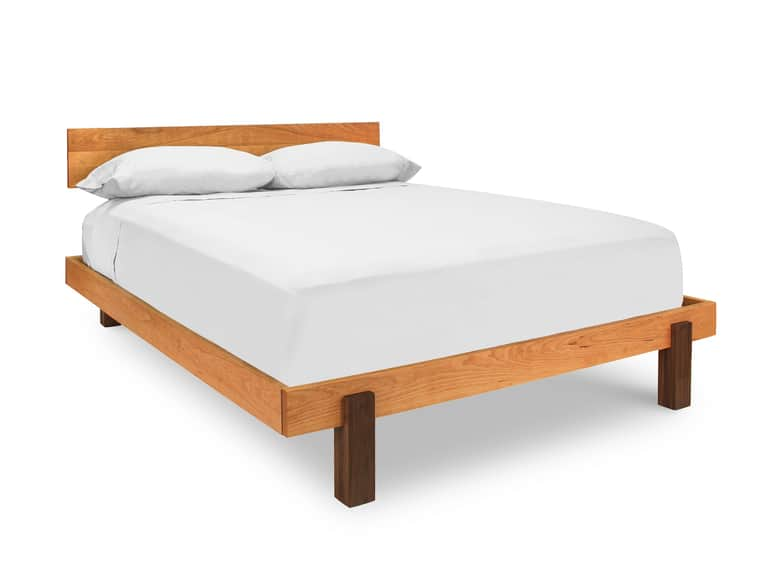
Measure the mattress separately from the frame. Bed frames can add several inches to the overall length and width, while headboards, footboards, or a protruding base can change how much clearance remains. If the frame has legs or a platform, note its height too. A high mattress-and-frame combination may block a window or make a low ceiling feel more imposing; a very low arrangement may be awkward for someone who prefers a higher seat.
Use painter’s tape to mark the proposed footprint on the floor. Then walk around the outline, open drawers, pull out a desk chair, and check that doors can swing freely. This simple test turns abstract dimensions into a practical sense of space. It can also reveal whether a narrower mattress would make daily movement easier, or whether a different orientation would protect a needed walkway.
- Record the room’s length and width, including any alcoves or irregular corners.
- Measure the mattress and the full outside dimensions of the bed frame.
- Mark door swings, closet access, radiators, windows, and furniture that must remain usable.
- Allow for the route you need to get in and out of bed, make it, and change the bedding.
- Check ceiling height and window placement if the bed will sit beneath or beside a window.
Clearance is personal as well as physical. A room that can technically accommodate a bed may still feel cramped if the only route across it is a narrow squeeze. Consider how you use the bedroom at night and in the morning, not only how the furniture appears in a drawing.
Check the journey from the street to the bedroom
In a city building, the mattress has to pass through more than a bedroom door. Before choosing a size or construction, measure the apartment entrance, interior doorways, hall turns, stairwell landings, and elevator. Note any tight corners, low ceilings, or restrictions on using service entrances. A mattress that fits the room but cannot make the trip inside is an expensive planning mistake.
Ask how the mattress will be packaged and delivered. Some are compressed for transport, while others arrive full-size; packaging changes the dimensions of the load, but it does not remove the need to consider hallways, staircases, and the final turn into the room. Confirm whether delivery includes carrying the mattress upstairs, removing packaging, or taking away an old mattress. Policies vary, so rely on the specific written details rather than assumptions.
Weight matters after delivery as well. A dense mattress can be difficult to rotate or reposition in a small room, especially when access is limited on one side. If you expect to move frequently, or if the bed must be shifted to clean or reach storage, include that practical burden in the comparison. Ask for the mattress weight and recommended handling method before deciding.
Understand what “organic” refers to
Mattress construction is layered. A finished mattress may contain a comfort layer, a support core, batting, an outer cover, adhesives, fire-safety components, and other materials. An organic claim might apply to one fiber, a specific layer, or a certified component—not necessarily to every part of the mattress. Clear product documentation should say what is certified and identify the materials used in the full construction.
Look for the name of the certification program, the certified material, and the scope of the claim. If a label or product page uses broad language without explaining which component it describes, ask for clarification. A certification can help substantiate a particular standard, but it does not automatically mean that a mattress is free of every synthetic material, chemical treatment, or manufacturing input.
Certifications also address different questions. Some standards focus on the organic status of agricultural fibers; others assess product emissions, chemical inputs, or manufacturing practices. These distinctions matter. A certification for a cotton cover does not establish the composition of the support core, while a low-emissions standard does not by itself prove that all materials are organic.
When comparing options, request or review:
- A complete materials list, including the core, comfort layers, quilting, cover, and any backing.
- The exact certification name and the components or production stages it covers.
- Information about fire-safety compliance and how it is achieved.
- Care instructions, warranty terms, and any restrictions on the foundation or frame.
- Details about the manufacturer’s sourcing and documentation, where available.
Careful reading is not suspicion; it is good consumer practice. Organic materials can be part of a thoughtful choice, but the useful comparison is between the actual constructions and verified claims—not between a reassuring adjective and a vague alternative.
Compare materials, feel, and support
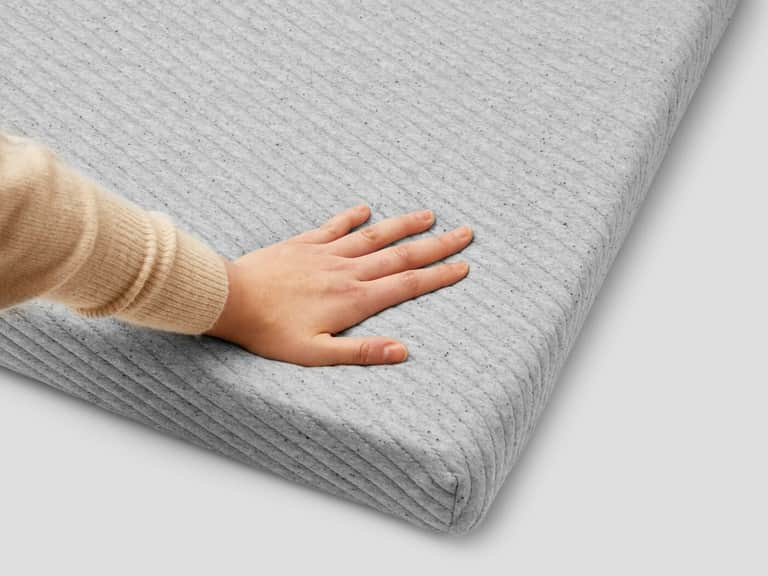
Natural and organic mattress materials do not all feel alike. Latex, wool, cotton, and other fibers have different resilience, cushioning, weight, and temperature behavior. Even mattresses using similar materials can feel quite different because of layer thickness, density, quilting, and the underlying support design. Material names provide a starting point; the full construction and your own experience determine whether the mattress suits you.
Consider how you sleep, how much support you prefer, and whether you share the bed. A mattress that feels comfortable while sitting on its edge may feel different when you lie in your usual position. If possible, try the mattress in person and spend enough time on it to notice pressure points and changes in alignment. If testing is not possible, study the return or comfort-trial policy closely: check the length of the trial, any required waiting period, pickup fees, and the conditions for a return.
Firmness descriptions are not universal measurements. One maker’s “medium” may feel firmer or softer than another’s, and the frame beneath the mattress affects the experience. Ask whether the manufacturer specifies a required foundation, slat spacing, or other support conditions. A mattress used on an incompatible base may not perform as intended and could affect warranty coverage.
For a compact city bedroom, mattress thickness and edge construction deserve particular attention. A tall mattress can raise the total bed height and make a small room feel visually fuller. Strong edge support may help when sitting on the side of the bed, but a robust edge does not make an oversized mattress easier to fit. Balance comfort and construction against the room’s real dimensions.
Plan for ventilation and a suitable foundation
Every mattress needs appropriate support, and many benefit from air moving around their base. The manufacturer’s foundation guidance should be treated as part of the product specification, not an optional footnote. Check whether the mattress is designed for a platform, slatted frame, box spring, or another base, and verify any requirements for slat spacing or center support.
In a small bedroom, a bed may sit close to a wall, radiator, or window. Keep the mattress away from direct heat and follow the manufacturer’s advice about ventilation and placement. If the bed is pushed against a wall on one side, the space can be harder to inspect and clean; leaving a small gap where practical may improve access. Do not block heating equipment or ventilation grilles to gain a little more floor space.
Humidity and air circulation can vary from one apartment to another, especially in older buildings or rooms with limited windows. Use a mattress protector suited to the mattress and follow its care directions. Periodically check the underside and the foundation for signs of trapped moisture or dust. If a mattress needs to be lifted or rotated, make sure the room layout leaves enough space to do so safely.
Some mattresses are designed to be rotated, some can be flipped, and others should remain in one orientation. Do not assume all models share the same care routine. Confirm the instructions before purchase, then consider whether you can realistically follow them in a narrow room. Maintenance that requires two people or a large turning radius may be inconvenient when furniture nearly fills the floor.
Make upkeep part of the decision
Mattress care ranges from simple to specialized. Covers may be removable or fixed; some can be spot-cleaned, while others should not be washed. Some materials should be protected from direct sunlight or moisture. Read the instructions before purchase, particularly if the bedroom is also used for hobbies, pets, or other activities that increase the chance of spills and wear.
A washable protector can help shield the sleep surface from everyday soil, but it should fit the mattress without pulling tightly across its surface. Check its dimensions and depth, especially when the mattress is unusually thick. Sheets also need to fit the mattress height, and fitted-sheet pockets that are too shallow may come loose during the night.
Ask about the warranty and what it covers. Warranty terms commonly distinguish manufacturing defects from normal changes in feel or appearance, and they may require a particular foundation. Read the conditions for sagging, stains, and support before relying on warranty coverage. Keep receipts and care records in a place you can find later.
Think beyond the mattress footprint
A mattress occupies one rectangle, but bedding and daily routines take up space too. A wider bed can reduce room for a dresser or desk; a taller frame can limit under-bed storage; a narrow aisle may make changing sheets frustrating. Consider where pillows, blankets, and laundry will go when they are not on the bed. In a small home, storage is part of sleep planning.
Measure bedside tables and storage bins, and test drawers while the bed is marked out. If a closet door cannot open fully, consider whether a different bed position or a smaller frame will solve the problem. Avoid planning around theoretical storage that is difficult to reach. A useful layout supports ordinary habits rather than requiring furniture to be moved every morning.
Room shape can guide the layout. In a long, narrow bedroom, placing the bed along a shorter wall may preserve a continuous walkway, provided windows and doors remain accessible. In a room with an alcove, the recess may make a particular mattress size feel integrated, but measure carefully before assuming standard dimensions will work. The most spacious arrangement is not always the one with the bed centered on a wall; circulation and access matter more than symmetry.
A practical comparison checklist
Before making a final decision, compare each option against the same set of questions. This keeps attractive descriptions from overshadowing everyday fit.
- Room fit: Does the mattress and frame leave usable paths, door access, and space for essential furniture?
- Delivery fit: Can the packaged or full-size mattress pass through the building entrance, hall, stairs, elevator, and bedroom doorway?
- Construction: Are the materials in each layer clearly identified?
- Certification: Which material or production stage is covered by each certification?
- Comfort: Does the firmness and support suit your sleeping position and preferences?
- Foundation: Is your current frame compatible with the mattress’s stated requirements?
- Ventilation: Can the mattress be supported and maintained as directed in the room you have?
- Care: Are cleaning, rotation, and handling instructions practical for your home?
- Policies: Do the trial, return, warranty, and delivery terms meet your needs?
- Total dimensions: Have you considered the combined height and footprint of mattress, frame, and bedding?
Choose for the room you actually live in
Evaluating an organic mattress for a compact city bedroom is an exercise in connecting details. Materials matter, but so do the staircase, the frame, the window, the closet, and the daily route from the door to the bed. Certifications can make claims easier to assess, while clear care guidance helps turn an appealing choice into a sustainable routine.
Measure before browsing, check the entire delivery path, and compare construction rather than relying on broad labels. Think about how the mattress will feel, how it will be supported, and whether you can maintain it in the space available. A well-chosen mattress should make the bedroom more restful without making the rest of the room harder to use.
In a city where every square foot has a job, thoughtful planning is a form of comfort. The right decision is not necessarily the largest or most elaborate mattress. It is the one whose materials, support, dimensions, and upkeep fit both the sleeper and the small world around the bed.