Small-space living · Bedding
Bedding for Small NYC Apartments: A Practical Guide to Compact Sleep Setups
In a New York apartment, a good night’s sleep has to coexist with the rest of the day. Thoughtful choices about layers, fabric, washing, and storage can make a compact bedroom—or a living room that changes roles—feel comfortable without letting bedding take over.
Start with the room’s daily rhythm
A small sleep space is not simply a larger bedroom with less floor area. It often has a different schedule. A bed may share its room with a desk, a sofa may become a guest bed, or a futon may need to shift from nighttime sleeping surface to daytime seating. Bedding that works well in one of these arrangements should be comfortable in use and manageable when it is not in use.
Before choosing sheets or blankets, consider how often the sleep surface is occupied. A bed used every night has different demands from a guest futon opened occasionally. If the room changes function each morning, the most useful setup may be one that can be stripped, folded, or made ready again without a complicated sequence. If the bed remains in place, storage and laundry may matter more than quick conversion.
Notice where bedding can realistically go during the day. Measure the shelf, drawer, under-bed clearance, or closet section available for extra layers. A blanket that is easy to fold but has nowhere to live is still a space problem. Likewise, a duvet that needs a large dedicated cupboard may be less practical than a lighter arrangement that can fit in a lidded bin or on a closet shelf.
Think in terms of the whole routine: making the bed, changing the sheets, carrying laundry through the apartment, and putting away items that are not needed. In a compact home, small improvements to these routines can make the room feel calmer and easier to use.
Build a simple, adjustable bedding system
A useful compact sleep setup does not require many layers. It requires layers that serve clear purposes and can be adjusted as conditions change. Begin with a fitted sheet suited to the mattress or futon dimensions. Add a pillow that provides the kind of support you prefer, then choose a primary cover—such as a comforter or duvet—whose warmth makes sense for the room and season.
A light blanket can provide a flexible middle layer. It is easier to add or remove than a second bulky comforter, and it can be folded at the foot of a bed or stored on a nearby shelf. The idea is not to create a perfect formula for every person, but to avoid keeping several rarely used layers on the sleep surface simply because they were once useful.
- Base layer: A well-fitting sheet protects the sleep surface and creates a washable contact layer.
- Support layer: A pillow with a suitable loft and firmness helps make the sleeping arrangement feel personal.
- Warmth layer: Choose a comforter or duvet weight that suits typical indoor conditions, and add a lighter blanket when extra flexibility is useful.
- Protection layer: A mattress protector can help shield the surface from routine spills, perspiration, and wear, particularly when a futon or sofa bed is used often.
Each additional layer needs a place when it is removed. That practical test is a good filter: if an item is hard to store, hard to wash, and rarely needed, it may not earn its space. Keep the everyday arrangement uncomplicated and reserve seasonal extras for storage elsewhere if possible.
Fabric, weave, and the feel of the room
Sheets influence how a bed feels against the skin, how air moves around the sleeper, and how much work laundry requires. Cotton is a familiar option, but the word alone does not describe the full experience. Fiber length, weave, fabric weight, and finishing all contribute to feel and performance.
Cotton percale is commonly associated with a crisp, matte hand and a relatively airy feel. Cotton sateen tends to feel smoother and may have a subtle sheen. Neither weave is universally better. Someone who prefers a cool, crisp surface may favor percale, while someone who likes a silkier touch may gravitate toward sateen. The best choice is the one that feels comfortable and fits the household’s care routine.
Long-staple cotton can be used in different constructions, so it is useful to read the fabric description rather than rely on a single label. For example, a percale sheet may be described as lightweight and breathable, while a sateen sheet may emphasize a smoother finish. A Finna flat sheet, for instance, is described as extra-long-staple cotton percale with a crisp, matte feel; a Fiona fitted sheet is made from long-staple cotton sateen. These examples illustrate how weave and finish can create distinct tactile preferences, not a ranking of which sheet is right for every compact home.
For a fitted sheet, dimensions matter just as much as fabric. Check the mattress length and width, as well as its depth, including any topper or pad. A sheet that is too shallow may pull free at the corners; one that is excessively deep can bunch. Sofa beds and futons may have nonstandard dimensions, so measuring the actual sleep surface is more reliable than assuming a standard mattress size.
Breathability and seasonal comfort
New York’s seasons can make bedding choices feel like a moving target. A warm apartment in winter may call for less insulation than a drafty room, while summer humidity can make heavy layers uncomfortable. Indoor temperature, airflow, personal warmth preferences, and the room’s exposure to sunlight all shape what feels right.
Breathable materials can help a sleep setup feel less stuffy, but no fabric guarantees a particular temperature for every sleeper. Cotton sheets are a familiar option, and lighter weaves may suit people who prefer an airier surface. Natural fills such as down or wool have their own feel and care requirements; down is known for loft and insulating capacity, while wool is often valued for moisture management. A fill’s warmth also depends on construction and weight, so product descriptions should be read as a whole.
Instead of purchasing a separate heavy bedding set for every season, consider an adaptable combination. A moderate-weight comforter can cover much of the year, with a thin blanket for cooler nights and a lighter cover for warmer periods. If a room runs hot, reducing the number or weight of layers may be more helpful than adding a specialized item. If windows are drafty, improving the room’s comfort may matter as much as changing the bedding.
In a shared or multipurpose room, ventilation is part of the setup. Leave space around a folded futon or mattress when possible, and follow the manufacturer’s guidance for airing and care. Keeping bedding dry and allowing the sleep surface to breathe can help it stay fresher between uses.
Pillows: small objects, noticeable difference
A pillow occupies little storage space, but it has a large effect on how a sleep arrangement feels. Pillow height and firmness should suit the sleeper’s preferences and sleeping position. A pillow that feels comfortable when lying on the back may not provide the same sensation on the side, and some people prefer different pillows for different uses.
Compact apartments reward pillows that have an easy role when they are not on the bed. A spare pillow might fit in a closet shelf, a storage ottoman, or a zipped fabric bag. If it remains in use as a back cushion during the day, choose a cover that can be washed or protected. A dedicated pillow protector adds a washable barrier beneath the pillowcase and can simplify routine upkeep.
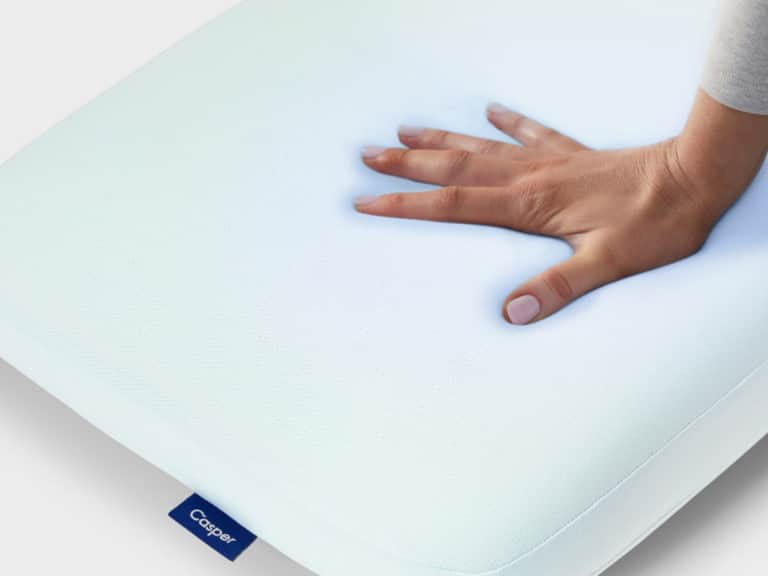
Materials vary. Down can feel soft and lofty; down-alternative fills and foam constructions may offer different levels of resilience and structure. A hybrid design combines materials, which can appeal to someone looking for a balance between softness and support. The Hybrid Snow Pillow, for example, combines foam layers with down-alternative fiber and has a removable knit cover described as machine washable. Its layered construction and cover are details to consider when comparing pillow feel and care—not a substitute for deciding whether its support suits you.
Whatever the fill, read the care instructions before bringing a pillow home. Some can be washed as a whole, while others require spot cleaning or have a washable outer cover only. In a small apartment without a large-capacity washer or dryer, the distinction can influence how convenient a pillow is to maintain.
Make laundry part of the buying decision
Care instructions are easy to overlook when comparing bedding, yet they matter especially in a home with limited storage and laundry options. Sheets and pillowcases are used frequently, so check whether they can be machine washed, what water temperature is recommended, and whether they need low-heat drying or careful ironing. Follow the label rather than assuming all cotton items can be handled the same way.
Some fabrics should not be bleached or softened; some fills need thorough drying to prevent clumping or lingering dampness. A product that is simple to clean may be more practical than one whose care demands specialized equipment or a large drying area. If the building’s laundry room is shared, consider whether the bedding fits comfortably into the machines and whether it can be carried easily.
Two sets of sheets can make rotation easier: one on the bed and one clean set ready to use. More than that may be unnecessary if closet space is scarce. Store clean sheets together by size or set, and avoid placing them somewhere difficult to reach. Clear, predictable storage makes changing the bed less of a project.
For comforters, pillows, and mattress protectors, distinguish between washable components and those that need professional cleaning. A removable cover can be particularly useful when the inner item is not designed for frequent washing. Keep a record of care labels or instructions if they are likely to be removed, and avoid improvising cleaning methods that may damage fill or fabric.
Futons, sofa beds, and bedding that must disappear
A sleep surface that converts for daytime use creates a specific bedding challenge: layers need to come off or fold away without slowing down the room’s transformation. Before choosing a comforter, check how the futon or sofa bed opens and where the bedding could be placed once it is folded. Thick duvets, bulky pillows, and loose throws may interfere with the mechanism or make the converted furniture harder to use.
Some households make the transition easier by keeping a compact set of bedding close to the sleeping surface. A basket, shallow storage box, or drawer can hold a folded blanket and pillowcases, provided it does not obstruct movement or ventilation. A simple routine—remove the pillow, fold the blanket, then convert the frame—can reduce friction. The storage method should match the furniture manufacturer’s instructions and the available space.
For a guest setup used occasionally, washable layers and a protective cover can help keep the mattress or futon ready between visits. For a surface used every night, prioritize comfort and convenient access to fresh sheets over an arrangement that looks especially tidy during the day. The best solution is one that works for the frequency of use, not an idealized version of the room.
Take measurements before selecting sheets or protectors. A sofa-bed mattress may differ from a standard bed in length, depth, or shape. Check the dimensions of the sleeping surface in its open position, and make sure bedding does not interfere with folding or closing. If the design requires bedding to be removed before conversion, build that step into the daily routine.
Storage without surrendering the floor
In a small apartment, bedding storage should use space that is already available rather than create another obstacle. Under-bed areas may be useful if there is enough clearance and if the space stays clean and dry. A high shelf can hold spare linens, while a storage bench or ottoman may work for items needed every day. Choose containers that are easy to open; a perfectly concealed box that is difficult to access can discourage regular use.
Fold bedding to fit the container rather than buying a container for every possible layer. Keep everyday linens near the bed and seasonal items farther away. Labeling a bin can help distinguish sheets, blankets, and guest bedding, especially when several sets look alike. Avoid packing textiles so tightly that they are difficult to remove or remain compressed for long periods.
Where a futon or mattress is folded or stored, follow its care guidance and ensure it can dry or air as recommended. Do not assume a textile can be put away damp after a humid night or a fresh wash. A clean, dry storage space protects both the bedding and the room from mustiness.
A practical planning checklist
Before buying or reorganizing a compact sleep setup, walk through a few concrete questions. This simple audit can prevent mismatched sizes and unused layers:
- How often is the sleep surface used, and does it convert for daytime living?
- What are the exact dimensions and depth of the mattress, futon, or sofa-bed surface?
- Where will the pillow, blanket, and any extra layers go when the bed is not in use?
- Does the room tend to feel warm, cool, humid, or drafty across the seasons?
- Which fabric feels comfortable, and does its care routine fit the household’s laundry access?
- Would a mattress protector or pillow protector reduce the need to clean a harder-to-wash item?
- Can the bedding be folded, stored, and retrieved without blocking a doorway or daily path?
Answering these questions turns a broad search for “better bedding” into a more useful set of priorities. One household may need a breathable sheet and a light blanket; another may value a washable pillow cover and a compact storage plan. The right setup is shaped by the space, the sleeper, and the routine.
Comfort is a system, not a pile
Small-space bedding works best when each piece earns its place. A fitted sheet should fit the actual sleep surface. A pillow should feel supportive to the person using it. A comforter should match the room’s usual conditions, and extra layers should be easy to store. Breathability, care instructions, and dimensions matter as much as softness because they determine how the arrangement performs beyond the first night.
In a city apartment, a bed can be a private retreat, a guest room, or one part of a room that serves several purposes. The most successful sleep setup respects all of those roles. Choose fewer, more useful layers; plan storage before it becomes urgent; and keep laundry and seasonal changes in mind. The result need not be elaborate. A thoughtfully fitted sheet, a comfortable pillow, and a manageable warmth layer can make a compact room feel ready for rest without overwhelming the life that continues around it.